
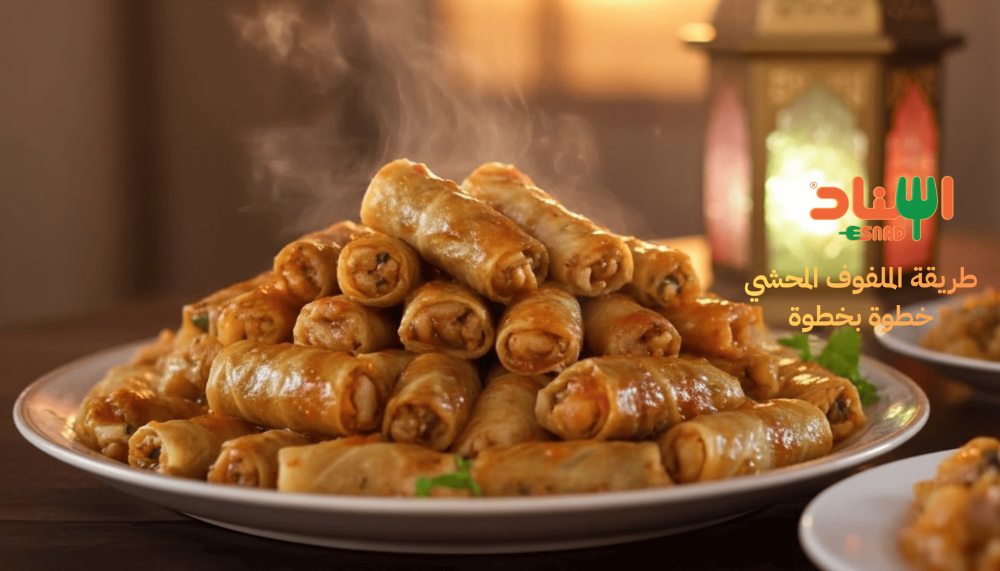
Cabbage is the undisputed king of stuffed vegetables on the Ramadan table; a dish that combines warmth, high nutritional value (vitamin C and fiber), and a rich, flavorful taste that pleases everyone. Despite its benefits, many women hesitate to prepare it for fear of bloating or difficulty in achieving the desired cooking temperature.
In this guide, we'll make things easier for you. We'll explain how to make stuffed cabbage rolls professionally, ensuring they're as tender as butter, with a rich red filling, and include clever tips from Esnad Kitchen to eliminate the smell of boiling and prevent any discomfort after eating.
Ingredients for stuffed cabbage
To ensure your stuffed cabbage rolls turn out perfectly the first time, prepare these ingredients precisely. Using "Esnad" products here guarantees a balanced taste and a rich flavor, saving you from having to experiment.
1. The Basics
- Cabbage head: Medium size (choose a lightweight "airy" head to make it easier to unwrap the leaves).
- To boil cabbage: boiling water + 1 tablespoon of cumin powder (ground or whole) + a small piece of bread (to remove the smell).
2. Ingredients for the Saudi red filling
- Rice: 2 cups of Egyptian rice (short grain), washed and well drained.
- Meat: 500 grams of minced meat (lamb or veal) with a medium fat content and tenderness.
- For the sauce: 2 large onions, finely chopped + 3 tablespoons of tomato paste (strong color).
- Leafy greens: 1 cup chopped dill + 1 cup chopped parsley + 1/2 cup fresh coriander.
- Esnad's stuffing spices (the secret to flavor):
- 1 teaspoon of seven spices (seven spices).
- 1 teaspoon of cumin powder from Esnad.
- ½ teaspoon of cinnamon powder from Esnad.
- ½ teaspoon of dried coriander powder .
- Salt and black pepper to taste.
- Additions: ¼ cup vegetable oil (for the shine of the rice) + 3 crushed garlic cloves.
3. Ingredients for the broth (or stew)
- Water: 3-4 cups of hot water.
- Concentrated flavor: 2 Esnad seven-spice chicken stock cubes.
- Color: 2 tablespoons of tomato sauce.
- Additions: Juice of 2 lemons + ¼ cup olive oil + a pinch of dried mint (optional).
- For the bottom (protection): thick potato slices, carrots, or boiled cabbage stalks.
Preparation: Select the cabbage and boil it without any "odor".
The first secret to successful stuffed cabbage rolls begins with choosing the right head. Avoid very heavy, compact cabbages (those meant for salads); instead, choose a slightly airy head with broad, thin leaves, as it's easier to separate and roll without breaking.
Smart boiling steps (without unpleasant odor)
The age-old problem with making cabbage is the pungent smell of chard and the resulting bloating. The solution is simple and lies in your spices:
- Preparation: Cut the tough head of cabbage in half and pull it off, so that the leaves will separate as soon as the water comes out without breaking.
- Flavored water (Sirr Esnad): Put a pot of water to boil, and add a tablespoon of Esnad cumin and a small piece of bread.
- Why? Cumin, with its strong flavor and natural properties, expels gas and completely prevents bloating. As for the piece of bread, it acts as a filter, absorbing the strong sulfurous smell from the water, preventing it from spreading throughout the house.
- Timing: Boil the leaves for only 3-4 minutes until they soften and become pliable. Do not overcook them, as they will finish cooking later.
- Shock: Immediately lift the leaves to a colander under cold water to stop cooking, and set the boiling water aside.
How to make stuffed cabbage with Saudi red filling (the secret is in the mixture)
The heart of stuffed vegetables is the filling. Schools of thought vary, but the Saudi red "musabbaka" filling remains the most delicious and sought after because it "satisfies" the eyes and the stomach.
1. Prepare the rice and meat
For successful stuffed cabbage rolls, use only Egyptian (short-grain) rice; it absorbs the sauce and flavor better than basmati rice. Wash the rice and drain it well. For the meat, it's best to use medium-fat minced meat (lamb or veal); the fat melts inside the meat, giving it irresistible tenderness.
2. Strong red alloy
To achieve a deep red color:
- In a pan, sauté the chopped onion in oil or ghee until it softens.
- Add two tablespoons of tomato paste . The advantage of this paste is that it is thick and concentrated, giving you a strong color and rich taste without a pungent acidity.
- Stir the sauce for a minute to brown, then add the tomato juice (optional to increase the sauce) and let it simmer until the oil rises to the surface.
3. Esnad Spices (The Secret of Flavor)
Add the cooked mixture over the rice and raw minced meat. Now it's time to season with Esnad products to enhance the flavor:
- Seven spices from Esnad: one teaspoon (gives depth and a distinctive meat flavor).
- Ground cinnamon from Esnad: a light sprinkle (cinnamon and cabbage is a classic duo).
- Dried coriander: for a pleasant aroma.
- Black pepper and salt.
- Finally, add the chopped leafy greens (dill, parsley, cilantro) and mix the filling well with your hand.
Stuffed cabbage with pomegranate molasses (Levantine twist)
For lovers of sweet and sour flavors, the Levantine stuffed cabbage (yalangi) method differs from the Saudi method in that it relies on "raw rai" and olive oil.
Here are the required modifications for the Levantine filling:
- Meatless: Skip the minced meat and make it with rice and vegetables only (an excellent vegetarian option).
- Liquids: Add 1/4 cup of high-quality pomegranate molasses + 1 cup of virgin olive oil to the filling.
- The secret ingredient (mint): Replace the parsley with dried mint from Esnad. Dried mint is essential here; it provides a refreshing touch that perfectly complements the tanginess of the pomegranate molasses and crushed garlic, and gives a completely different character from the red filling.
- Additions: Increase the amount of crushed garlic and lemon juice inside the filling.
Twisting and folding techniques: How to prevent finger separation?
Many beginners face the problem of rice boiling over. Here are practical solutions for stuffed cabbage rolls to keep them firm:
Preparing the paper
Remove the tough stem from the center of the blanched leaf with a knife (reserve it). Cut the leaf into equal rectangles the size of your palm.
Correct winding mechanism
- Place a small amount of rice (about the size of a little finger) at one end of the paper. Remember: the rice will double in size.
- Roll the paper into a cylinder shape, applying light pressure to expel the air.
- Note: In cabbage, we do not fold the ends (sides) like grape leaves; because cabbage leaves stick together with heat and close automatically.
Protecting the pot (the rule)
At the bottom of the pot, arrange tough, succulent potatoes or thick slices of tomato. Sprinkle with Esnad salt and black pepper . This layer protects the stuffed vegetables and gives them a wonderful flavor.
Arrange the fingers in a circular and tight shape (without gaps), and distribute whole garlic cloves between the layers.
The broth is the secret: how to cook cabbage until it's fluffy
The cooking process is what distinguishes "regular" stuffed cabbage from "spiced" stuffed cabbage. A common mistake in the method of preparing stuffed cabbage is using only water and salt, which results in a bland taste.
Rich broth mix (Tashreeba)
To obtain a rich, red broth that the stuffed vegetables will absorb:
- In an outer container, put 3 cups of boiling water.
- Dissolve two Esnad seven-spice chicken stock cubes in it . This stock is a great alternative to boiling a whole chicken, and provides instant richness.
- Add two tablespoons of tomato sauce (for color), a quarter cup of olive oil (for shine), lemon juice, and an extra sprinkle of cumin.
- Pour the broth slowly over the stuffed vegetables.
- Correct measure: The broth should only cover the second-to-last layer (because the cabbage releases water).
- A trick to prevent the fingers from falling apart when boiling: Place a heavy ceramic plate upside down on top of the fingers before covering the pot.
Signs of maturity and serving method
After letting the pot boil for 10 minutes and then reducing the heat for 45-60 minutes, here's how to ensure success and serve it professionally:
1. Signs of maturity (Checklist):
- The fork test: Insert the fork into one of your fingers; if it goes in perfectly smooth like butter, the paper and rice are cooked.
- Oil: The appearance of red oil shining clearly on the surface of the pot and the disappearance of most of the liquid.
- Final touch: Two minutes before turning off the fire, squeeze in a whole lemon and add an extra drizzle of olive oil for a super shine.
2. Application steps (The Art of the Heart):
- Turn off the heat and leave the covered pot to rest for 15 minutes (a very necessary step for the fingers to stick together).
- Remove the heavy plate (the heavy plate) carefully.
- Place the large serving dish (tabsi) on top of the pot, and with a quick movement turn it over.
- Lift the pot slowly to see the tightly packed "mold" of stuffed vegetables.
- Garnish it with pomegranate seeds and parsley, and serve it hot with yogurt or toasted bread.
Making stuffed cabbage at home is more than just cooking; it's creating warm Ramadan memories. Thanks to guaranteed ingredients like spices, broth, and a rich sauce, you save time and ensure a mouthwatering taste from the first try, free from any digestive issues and full of authentic Saudi flavor.
And to find out about our other recipes for the holy month of Ramadan:
- How to make Maqluba with chicken and Cajun spices, step by step, with a touch of Ramadan hospitality.
- How to make Kabsa with meat and mushrooms step by step | Esnad Ramadan Recipes
- 7 essential spices for Kabsa in Saudi cuisine
Prepare your meal and enjoy the most delicious cabbage rolls... Bon appétit!